 TheCircuitDog
LDO and DC-DC Regulator Startup Troubleshooting
A regulator that occasionally needs a manual jump-start may be experiencing an enable threshold issue, input collapse, output overload, thermal shutdown or an unintended back-power path.
First establish input and enable conditions
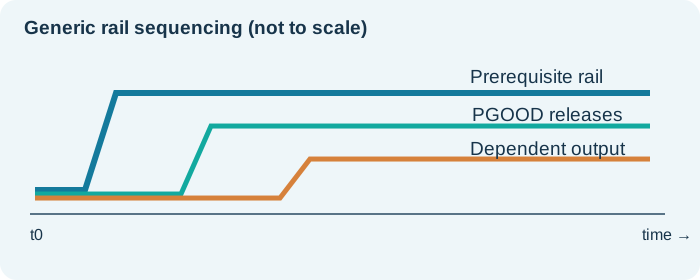
Record VIN, EN, reference/BIAS pins (if present), ground and output at startup and steady state. An EN waveform hovering around its threshold can create oscillation that resembles a supply problem.
Check unloaded and loaded behavior safely
Measure rail resistance to ground with power off after capacitors discharge, then compare a known-good and failing board. A current-limited supply can help investigate output loading, but only if the regulator is safely isolated/disabled and all attached IC sequencing rules are respected.
Look for an input-source limitation
A 5 V supply may indicate correct DC voltage on a DMM while actually pulsing under inrush or overload. Probe it with an oscilloscope and adequate grounding. If VIN collapses as VOUT rises, verify upstream current limit, soft-start and load.
Account for thermal and current-limit protection
Review datasheet current-limit curves, package thermal performance, feedback/adjust networks and output capacitance requirements. Startup current may be higher than steady-state current.
Document a controlled experiment
Change only one variable at a time—pull-up resistance, enable drive or load—and photograph the resulting waveforms. Avoid accidental backfeeding while experimenting with jump wires.
Practical checklist
- Capture VIN / EN / VOUT together.
- Compare against a known-good board.
- Check downstream shorts and inrush.
- Record current-limited injection results only after isolation checks.
- Review regulator application schematic and layout.